
Telegram: how public channels, groups and messages are searched, read and documented for OSINT investigations
How to do OSINT on Telegram: channels, groups, bots and secret chats, the web preview of public channels, IDs and message numbers, forwards and the origin of content, exporting with Telegram Desktop, tools such as Telepathy, TGStat and Telethon, cooperation with authorities after Durov’s arrest, an example of a recycled video, legal limits, documentation and frequently asked questions.

Telegram is both a messaging app and a publishing platform. Alongside private chats there are channels, which broadcast from one to many, and groups, which can have tens of thousands of members. That is where videos of wars and protests appear first, along with statements by activist and criminal groups, disinformation campaigns, offers of stolen data and illegal services, but also local news and the official channels of institutions and newspapers.
For the analyst Telegram is valuable because much of its content is public, ordered and linked together by forwards; it is difficult because messages vanish quickly, the internal search is limited and many spaces are closed. The method is always the same: find the right channels, trace content back to its origin, save at once and stay within the limits of what is genuinely public.
What you find on Telegram
- Channels
- One-to-many broadcasts, often public, with subscriber and view counts.
- Groups
- Conversations among members, public or private, sometimes with tens of thousands of participants.
- Bots
- Automated programs that answer commands, used for lawful and unlawful services.
- Forwards
- Forwarded messages that carry the source channel with them, unless it is hidden.
- Media
- Photos, videos and documents, often published before anywhere else.
- Links
- Links to sites, other channels, cryptocurrency wallets and contacts.
Telegram is studied with the tools of social media OSINT, usernames, video verification and web archives. The basic entries are SOCMINT, disinformation and capture.
The pages of this topic
Telegram: how it works
How Telegram works from an OSINT point of view: channels, groups, private and secret chats, bots, what is public and what is not, IDs, sequential message numbers, the web preview, forwards, cooperation with authorities.
Telegram: technique
The technique of OSINT on Telegram: defining the question, preparing a dedicated account, finding channels and groups, reading without leaving traces, tracing origin through forwards, rebuilding the timeline, studying the network, downloading original media, exporting and saving.
Telegram: sources
Sources for OSINT on Telegram: the web preview of channels, internal search, search engines, directories and statistics services, web archives, chat exports, the platform’s transparency reports.
Telegram: tools
Tools for OSINT on Telegram: the Telegram Desktop export, Telepathy, the Telethon library, TGStat and Telemetr for statistics and search, Lyzem, capture tools, web archives.
Telegram: guided example
A guided example: a video of an explosion in a port circulates on Italian channels; the forward chain, message numbers and a reverse search of the frames show it is old and from another place.
Telegram: limits
The limits of OSINT on Telegram: account and phone number, private spaces, rapid deletions, incomplete search, hidden forwards, cloned channels, unstable tools, legal limits on collecting personal data.
Telegram: how to document
How to document an analysis on Telegram: exports with message dates and numbers, full links, channel names and IDs, captures with address and date, original media with hashes, the forward chain, time zone.
Telegram: frequently asked questions
Short answers to the most common questions about OSINT on Telegram.
More topics in this section
Social media OSINT
How OSINT is done on social networks: profiles, posts, comments, photos and contact networks, numeric identifiers and creation dates, advanced search and archives, changes to platforms and researcher interfaces, cover profiles and legal limits, tools, an example of a fake account, limits, documentation and frequently asked questions.
9 pages
Usernames
How usernames are used in OSINT investigations: why people reuse them, searching hundreds of sites with Sherlock, Maigret and WhatsMyName, variants and name changes, numeric IDs, account information shown by platforms, archives, the Silk Road case, false positives and namesakes, legal limits, documentation and frequently asked questions.
9 pages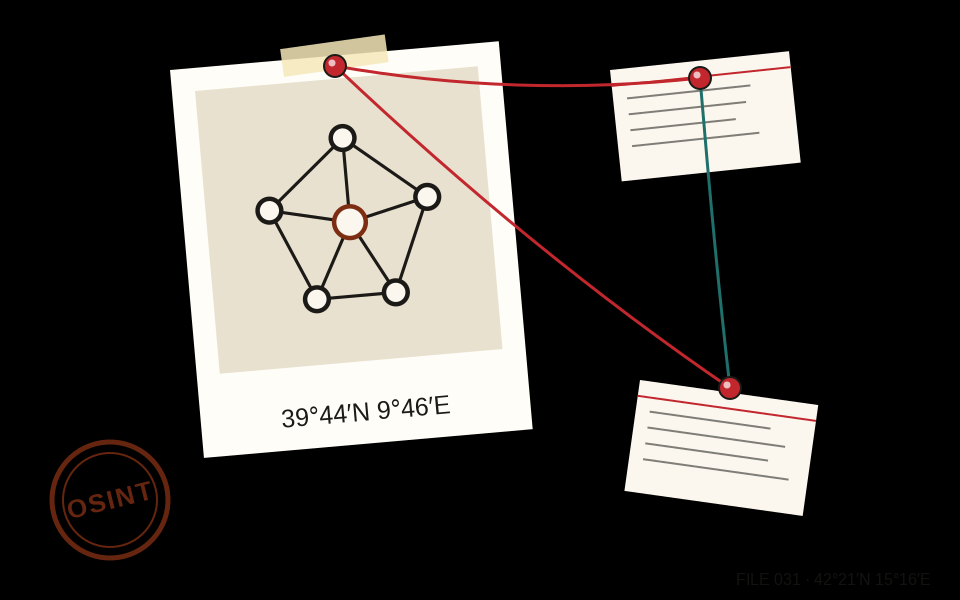
Network analysis
How network analysis is done in OSINT: nodes and links, degree, betweenness, communities and bipartite networks, technique from the question to the graph, sources such as registers, investigative databases, social media and web infrastructure, tools such as Gephi, Maltego, Neo4j and NetworkX, the case of the “Portal Kombat” network, an example in Python, limits, documentation and frequently asked questions.
9 pages